
Workshops & Field Trips
The Natural Channels Initiative remains committed to providing opportunities for professionals to expand their learning and knowledge with respect to Natural Channel Systems. Enhance your conference experience and practical expertise by registering for one of our specialized training sessions and hands-on workshops. These sessions are an excellent way to gain focused knowledge from industry leaders.
Please note all post-conference training workshops run concurrently and it is not possible to participate in more than one of these workshops.
Training workshops are limited to conference attendees only until May 11th. Starting May 12th, registration may open to non-attendees if space is still available. Registration for training workshops is a separate fee from the main conference registration.
See below for details on each workshop.
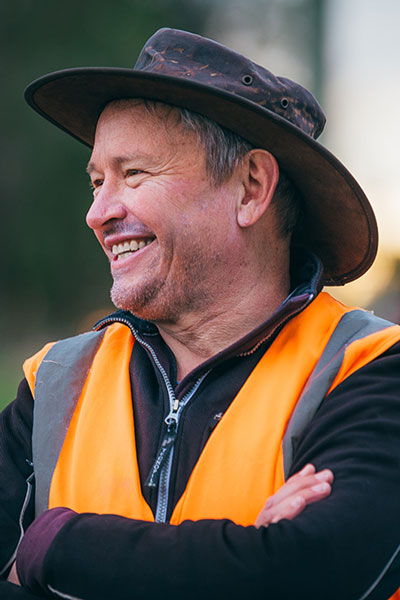
Facilitated by: Dr. Gary Brierley, University of Auckland , New Zealand
Gary Brierley is Professor and Chair of Physical Geography at the University of Auckland (Waipapa Taumata Rau) in Aotearoa New Zealand. He is co-developer, with Professor Kirstie Fryirs (Macquarie University, Sydney, Australia) of the River Styles Framework (Brierley & Fryirs, 2005). This coherent, open-ended (non-prescriptive), geomorphological approach to proactive, cost-effective river management was co-developed with river managers in Australia.
Supported by professional short courses, there has been significant uptake of the framework in various parts of the world (Fryirs et al., 2019, 2021). The underlying premise to ‘work with nature, work with the river’ moves beyond inherent limitations of ‘command-and-control’ management practices (Brierley & Fryirs, 2022). Building on these principles, collaborations with Māori colleagues in Aotearoa New Zealand respect the rights of rivers as living and indivisible entities (Brierley et al., 2019), embracing a multiple-knowledges lens that endeavours to ‘Find the Voice of the River’ (Brierley, 2020). Recent work outlines how Communities of River Practitioners (CoRPs) make best use of best available understandings in moves towards ‘living generatively with living rivers’ (Brierley et al., 2021, 2025).
Fee: $150+ HST
Time: Wednesday June 10, 2:00 p.m. to 5:30 p.m. & Thursday June 11, 9:00 a.m. to noon
Where: Peter George Centre for Living and Learning (PCGLL) Room TBA
Limited to 40 Participants
Included:
- Parking on campus for the day
- Wednesday Buffet Lunch
- Thursday Breakfast (coffee, tea and pastries)
- Thursday Boxed Lunch
Workshop Outline:
This one day (Wednesday afternoon, Thursday morning) training session (workshop) will present an overview of the River Styles Framework (Brierley & Fryirs, 2005; www.riverstyles.com). Developed in Australia to meet the needs of distinctive rivers in that part of the world, the generic approach to applied fluvial geomorphology builds on previous literatures and experiences in the Northern Hemisphere (UK and Canada). Systematic principles and guidelines can be adapted to conditions in any given landscape/ecoregion. The framework has four stages:
- Catchment-scale analysis of river character and behaviour and patterns of river reaches (tributary-trunk stream relations, connectivity analyses)
- Use of reach-scale analyses of river evolution to determine and map geomorphic river condition at the catchment scale
- Determination of river recovery potential based on reach scale evolutionary trajectories framed in their catchment context.
- Management applications – determine a realistically achievable vision; identify reach-scale target conditions to achieve that vision; prioritize management actions in a conservation-first approach that works with recovery; monitor and adapt.
The co-developers of the framework were invited to run a workshop in British Columbia to outline this holistic, proactive and strategic approach to geomorphologically-informed river management. The following output builds directly on this work.
Reid, D. A., Dekoning, P., Brierley, G., Cienciala, P., & Fryirs, K. (2026). Reframing and operationalizing holistic, geomorphologically informed river management in British Columbia, Canada. Canadian Journal of Fisheries and Aquatic Sciences, 83, 1-18.
Two attributes of the framework are considered to be especially pertinent in a Canadian context:
- The capacity to develop, structure and prioritize management interventions at the regional scale in ways that respect diversity in an evidence-based and cost-effective manner. The River Styles framework has been applied across New South Wales (Ontario is 34% larger than NS
- Fryirs, K., Hancock, F., Healey, M., Mould, S., Dobbs, L., Riches, M., … & Brierley, G. (2021). Things we can do now that we could not do before: Developing and using a cross-scalar, state-wide database to support geomorphologically-informed river management. PloS one, 16(1), e0244719.
- In recent years this work has been aligned with indigenous framings:
- Brierley, G., Tadaki, M., Hikuroa, D., Blue, B., Šunde, C., Tunnicliffe, J., & Salmond, A. (2019). A geomorphic perspective on the rights of the river in Aotearoa New Zealand. River Research and Applications, 35(10), 1640-1651.
The workshop will adopt a hands-on approach to interactive learning about all four stags of the workshop. By design/intent, the focus will be on shared approaches to learning in a multiple knowledges approach, as emphasized in the following papers
Brierley, G., Fryirs, K., Williams, R., Boothroyd, R., & Tolentino, P. L. (2025). Practitioner readiness: developing communities of river practitioners (CoRPs) to deliver proactive management practices that work with the river. Wiley Interdisciplinary Reviews: Water, 12(2), e70021.
Brierley, G., Fryirs, K., Reid, H., & Williams, R. (2021). The dark art of interpretation in geomorphology. Geomorphology, 390, 107870.
Facilitated by: Marty Melchior, Inter-Fluve
Marty Melchior is a river ecologist and geomorphologist with more than 30 years of experience in process-based river restoration. He has completed more than 700 river assessment and restoration projects across North America, specializing in channel design, dam removal, engineered wood applications, bioengineering, forensic geomorphology, fish habitat, riparian wetland restoration, and urban river reclamation.
Marty is a regular instructor for river restoration curricula at Harvard University, the University of Minnesota, and the University of Wisconsin–Madison, and he regularly teaches engineered large wood design for the US Forest Service.
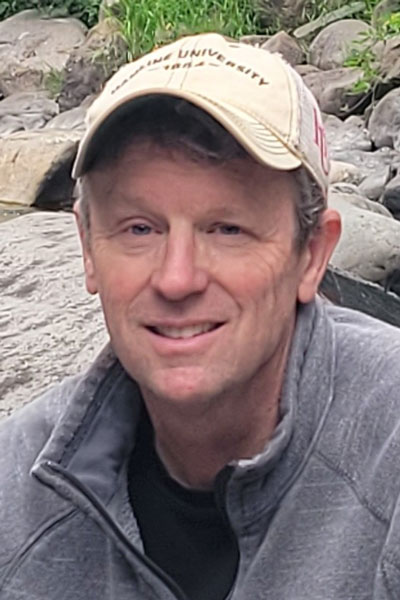
Facilitated by: Ken Dion, Waterfront Toronto
Ken Dion is a Project Director at Waterfront Toronto. He has been involved in the Port Lands Flood Protection Project since 2002, initially with the Toronto and Region Conservation Authority, and with Waterfront Toronto since 2018. He leverages his knowledge of the Port Lands and other complex waterfront projects to facilitate coordination between various project elements, real estate and asset transactions, and environmental compliance and reporting. He is also involved with capital projects in the broader central Toronto area and with Indigenous engagement on Waterfront Toronto initiatives.
Ken has managed several other complex flood protection and waterfront remediation projects including the Jim Tovey Lakeview Waterfront Conservation Area (in Mississauga), Downtown Brampton Flood Protection Project, Broadview Eastern Flood Protection Project, and the West Don Lands Flood Protection Project.
Fee: $175+ HST
Time: Wednesday June 10, 2:00 p.m. to 5:30 p.m. & Thursday June 11, 9:00 a.m. to noon followed by a field bus trip to Port Lands Toronto from 1:00 p.m. to 6:00 p.m.
Where: Peter George Centre for Living and Learning (PCGLL) Room TBA
Limited to 45 Participants
Included:
- Parking on campus for the day(s)
- Wednesday Buffet Lunch
- Thursday Breakfast (coffee, tea and pastries)
- Thursday Boxed Lunch
- Coach Bus to Port Lands, mouth of the Don River, Toronto and return to McMaster campus
Workshop Overview:
This workshop is designed to give project owners, managers and technical staff a brief overview of how wood can be used in river and riparian wetland restoration projects. You will leave this workshop with a general understanding of theory and practice used in engineered large wood design. This workshop is not intended to provide detailed technical instruction, and will not qualify you to design large wood projects. This workshop will give you an understanding of the risks involved, and the knowledge and experience needed to become a successful practitioner.
Port Lands Flood Protection Project is the culmination of more than 40 years of Grassroots-driven demands, and agency planning, design and construction to improve the mouth of the Don River in Toronto. The project has taken extensive flood-vulnerable lakefill lands, which were largely derelict brownfields consisting various marine and industrial land uses, and transformed them into a multi-channeled, naturalized river valley. The Project has remediated contaminated soils and groundwater, provided extensive flood protection and extensive public recreation opportunities, and laid out critical enabling municipal infrastructure to facilitate sustainable development in the surrounding lands. The Project sought to ecologically reconnect the Don River watershed with the Toronto Inner Harbour, Toronto Islands and the broader Lake Ontario ecosystems.
The tour will involve:
- A deeper dive in the historical conditions of the site,
- The steps required to undertake the planning, consultation and approvals for the project, and
- A discussion on the technical aspects to consider as part of the construction of the overall Project.
All of the above were critical, prior to being able to design and implement the various habitat features associated with the reconstructed river, adjoining wetlands, and supplemental habitat features, including placement of the various wood and rock features.
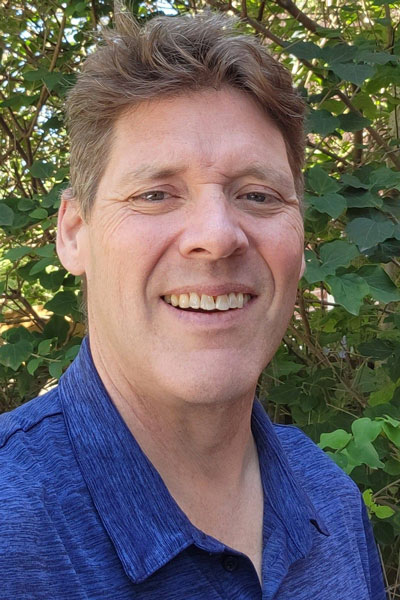
Facilitated by: David Bidelspach, 5 Smooth Stones Restoration, PLLC
David Bidelspach (P.E., P.Eng.) is a Design Engineer and Partner at 5 Smooth Stones Restoration, PLLC. He has been recognized as a 3-D River Restoration specialist with a broad range of experience restoring damaged ecosystems.
Mr. Bidelspach’s academic and research background includes University, Government, Engineering Consultant and Equipment Operator, where he has provided assessment, design, and construction oversight services on many restoration projects.
Teaching professional training courses related to river assessment, restoration design, and construction for over 20 years, Mr. Bidelspach is passionate about sharing the gift of ecosystem restoration with the next generations. He also worked for nine years as the river restoration technical leader for Stantec Consulting.
He has been involved in more than 150 river restoration/channel stabilization projects in 32 states, 7 Canadian Provinces/Territories, Costa Rica and Ecuador. He has been blessed to be tagging along with the teaching of Fluvial Geomorphology and Stream Restoration Sciences since 2002.

Fee: $200+ HST
Time: Wednesday June 10, 2:00 p.m. to 5:00 p.m., Thursday June 11, 9:00 a.m. to 5:00 p.m., and Friday June 12 9:00 a.m. to noon
Where: Peter George Centre for Living and Learning (PCGLL) Room TBA
Limited to 40 Participants
Requirements: Participants will need a laptop and stationery items (notebook and pen/pencil)
Included:
- Parking on campus for the day(s)
- Wednesday Buffet Lunch
- Thursday Breakfast (coffee, tea and pastries)
- Thursday Boxed Lunch
- Friday Breakfast (coffee, tea and pastries)
Course Outline:
Wednesday p.m.: 3-D Ecosystem Corridor Design – History and Current Tools
- Welcome
- What is Ecosystem Corridor Design (Breakout Groups)
- Ancient Reference Based Channel Design
- Classical Fluvial Geomorphology
- Bankfull Flow and Natural Channel Design
- Beyond or Beneath Channel Forming
- Corridor Restoration with Stormwater BMPS
- Introduction Ancaster Creek on McMaster University Campus (Potential Site Visit)
- Why – 3-D Ecosystem Corridor Design or Restoration (Breakout Groups)
Thursday a.m.: 3-D Process Based Natural Corridor Design (PB-NCD) Optimization Tools
- Goals and Objectives – Ancaster Creek
- Basic Restoration Processes
- Floodplain Connectivity
- Regional Curves
- MCDA (Breakout Groups)
- Optimization with Reference Reach Data
- Uncertainty Analysis
- 3-D Corridor Design AutoCAD Example
- Cost and Cut Fill
- Urban Channels
- Optimization Example (Breakout Groups)
Thursday p.m.: 3-D Process Based Natural Corridor Design (PB-NCD) for practical Construction – Risk Reduction and Construction
- What is Risk (Breakout Groups)
- Project verses Construction Risk
- Construction Techniques 101 and Video
- Construction Example Filsinger Park Stream Restoration, ON
- Risk Analysis as groups
- Construction Example Stone Creek Fish Passage and Restoration, BC
- Risk Analysis as groups
- Construction Example Dublin Gulch Arctic Grayling Habitat Restoration, YT
- Risk Analysis as groups
- Construction Equipment and Sequencing
- Sediment and Erosion Control
- Practical Construction Qualifications or Recommendations (Breakout Group)
- Ancaster Creek on McMaster University Campus (Potential Site Visit)
Friday a.m.: 3-D PB-NCD use to advance the future of Ecosystem Restoration
- What is New
- Training Opportunities and Networking
- Where are current Gaps
- Funding Opportunities
- Recreation related to Ecosystem Restoration
- Fishing Links
- Mental Health Treatment through Restored Corridors
- Community Gardens
- Guided Nature Therapy
- Community Revival with Ecosystem Restoration
- Corridor Urban Agriculture
- Vertically Integrated Riparian vegetation Production
- Festivals – Catfish and the Blues
- Ancaster Creek “Final” Preliminary Designs (Breakout Group)